Cloud environments are becoming increasingly distributed. Organizations may use multiple cloud providers while also running applications, devices, and workloads closer to where data is generated. Multi-cloud edge computing brings these approaches together, allowing businesses to process data at the edge while using multiple cloud environments for storage, analytics, applications, and other workloads.
This approach can help organizations reduce latency, improve flexibility, support real-time applications, and distribute workloads more effectively. At the same time, it introduces new challenges around security, governance, connectivity, cost, and operational visibility.
Understanding how multi-cloud edge computing works can help organizations decide which workloads belong at the edge, which should remain in the cloud, and how the two environments can work together.
What Is Multi-Cloud Edge Computing?
Multi-cloud edge computing combines multi-cloud computing with edge computing.
A multi-cloud environment uses services or workloads across multiple cloud providers. Organizations may distribute workloads based on factors such as performance, availability, geographic requirements, pricing, or access to specific cloud services.
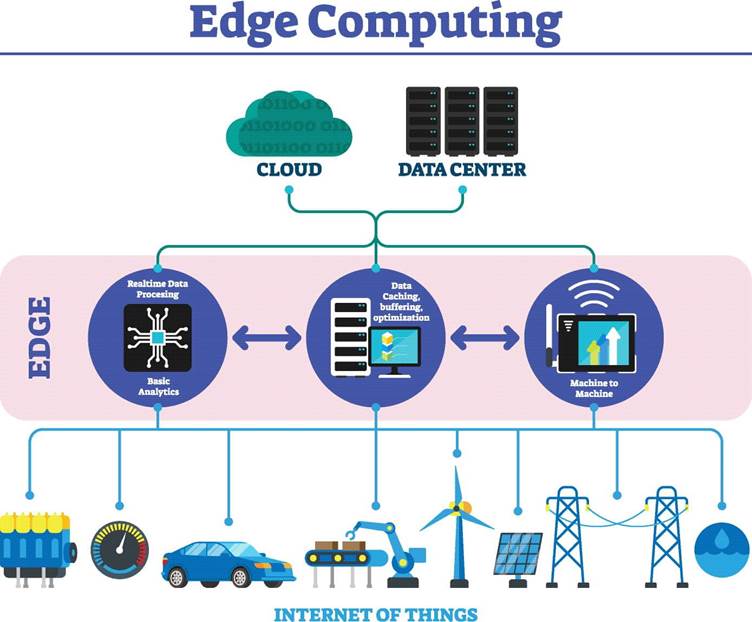
Edge computing moves processing closer to the source of the data. Instead of sending every piece of information to a centralized cloud or data center, some processing takes place on or near the devices generating that data.
Together, these approaches create a distributed computing model. Time-sensitive data can be processed at the edge, while cloud environments provide centralized storage, analytics, machine learning, and application services.
For example, a manufacturing company could process sensor data locally at a factory to identify an equipment problem immediately, while sending selected data to a cloud environment for long-term analysis and reporting.
How Does Multi-Cloud Edge Computing Work?
A typical multi-cloud edge environment connects devices, edge infrastructure, networks, and multiple cloud platforms.
Data source → Edge device → Edge infrastructure → Network → Cloud environment(s)
Data may first be generated by sensors, cameras, applications, vehicles, medical devices, or industrial equipment. An edge device or local processing system can analyze that data close to its source.
Time-sensitive actions can happen locally without waiting for data to travel to a centralized cloud. Other information can then be filtered, aggregated, or transferred to one or more cloud environments.
Cloud platforms can handle workloads that benefit from centralized infrastructure, such as:
- Large-scale data storage
- Advanced analytics
- Machine learning
- Application hosting
- Business intelligence
- Long-term data analysis
This allows organizations to determine where workloads should run based on their requirements rather than treating the edge and cloud as competing environments.
Why Combine Edge Computing With Multi-Cloud?
Edge computing and multi-cloud address different infrastructure needs.
Edge computing focuses on proximity. It brings processing closer to users, devices, and data sources.
Multi-cloud focuses on distribution and flexibility. It allows organizations to use services from multiple cloud providers instead of depending entirely on one environment.
Combining the two can provide several advantages.
Organizations can process latency-sensitive workloads locally while using cloud platforms for centralized workloads. They can also distribute applications and data across geographic locations and cloud providers where appropriate.
This can be particularly useful for organizations operating across multiple regions, managing large numbers of connected devices, or running applications where real-time responses are important.
Benefits of Multi-Cloud Edge Computing
Reduced Latency
Processing data closer to its source can reduce the time required to send information to a centralized cloud and receive a response.
This is important for applications such as industrial automation, connected vehicles, remote monitoring, and real-time analytics.
Greater Workload Flexibility
Not every workload needs to run in the same environment.
Organizations can keep latency-sensitive workloads at the edge while using different cloud providers for storage, analytics, application services, or specialized capabilities.
Improved Resilience
Distributing workloads across edge locations and multiple cloud environments can reduce dependence on a single infrastructure location or provider.
A distributed architecture can provide additional options when an individual location or service becomes unavailable.
More Efficient Data Processing
Edge environments can filter and process data before sending it to centralized cloud platforms.
Instead of transferring every piece of raw data, organizations can send only relevant information or aggregated results. This can help reduce unnecessary data movement.
Support for Real-Time Applications
Applications that require rapid responses can benefit from local processing.
Examples include:
- Industrial monitoring
- Smart retail systems
- Connected vehicles
- Healthcare monitoring
- IoT applications
- Video analytics
- Edge AI
Greater Control Over Data Location
Some organizations need to consider where data is generated, processed, and stored.
Edge processing can provide additional options for handling data locally before information is transferred to centralized cloud environments, supporting data-residency and sovereignty requirements where applicable.
Multi-Cloud Edge Computing Architecture
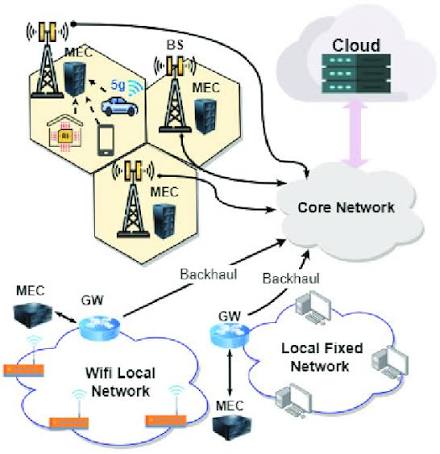
A multi-cloud edge architecture typically consists of several interconnected layers.
Edge Devices
These are the systems that generate or collect data. Examples include sensors, cameras, industrial machines, medical devices, vehicles, and connected consumer devices.
Edge Infrastructure
Local servers, gateways, and other processing systems can analyze data closer to its source.
This layer can handle workloads that require low latency or continued operation when connectivity to a centralized cloud is limited.
Network Layer
The network connects edge locations with users, applications, and cloud platforms.
Technologies such as 5G can support high-bandwidth and low-latency communication for certain edge workloads.
Multiple Cloud Environments
Different cloud providers can support different workloads based on business and technical requirements.
One environment might support application workloads, while another handles analytics, storage, or specialized machine learning services.
Centralized Management
A distributed architecture also requires consistent visibility and management.
Teams need to understand what is running across edge locations and cloud environments, how resources are being used, what risks exist, and how changes affect cost and performance.
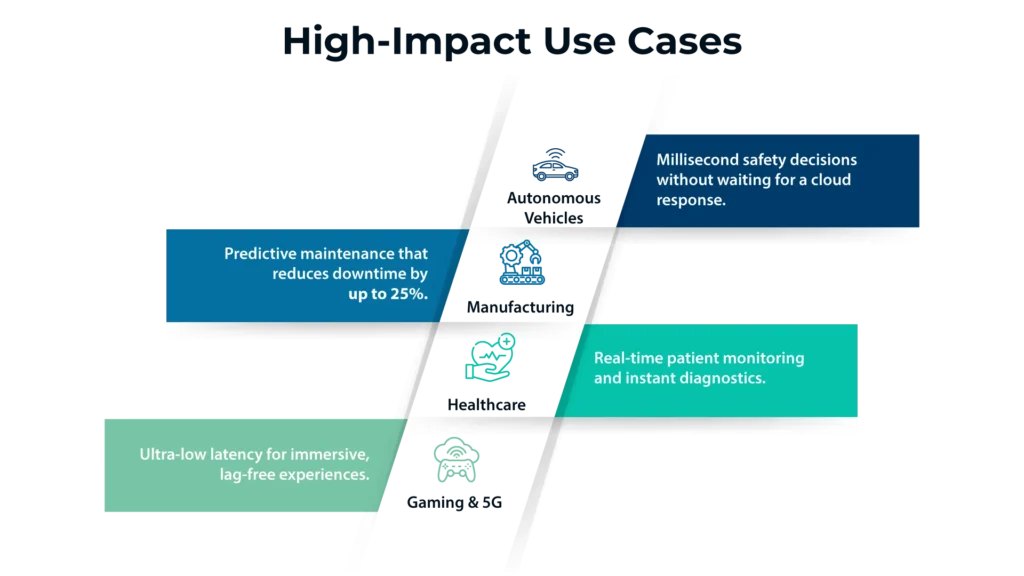
Multi-Cloud Edge Computing Use Cases
Multi-cloud edge computing can support a wide range of applications where data needs to be processed quickly or across geographically distributed environments.
Internet of Things
IoT devices can generate enormous amounts of data. Processing some of that information at the edge allows organizations to respond quickly without sending every event to a centralized cloud.
Relevant data can then be transferred to cloud environments for storage, analytics, or long-term analysis.
Manufacturing
Factories can use edge computing to monitor equipment, analyze sensor data, identify anomalies, and support predictive maintenance.
Multi-cloud environments can then provide centralized analytics, application services, and data storage across different facilities.
Healthcare
Connected medical devices and monitoring systems may require rapid local processing.
Edge computing can help process time-sensitive information closer to the patient or device, while cloud platforms can support broader analytics and centralized applications.
Healthcare organizations must also consider security, privacy, and data-governance requirements when designing these environments.
Retail
Retailers can use edge computing for applications such as inventory monitoring, smart-store systems, video analytics, and localized customer experiences.
Local processing can reduce latency while cloud platforms can provide centralized analytics across multiple stores and regions.
Autonomous and Connected Vehicles
Vehicles generate large volumes of data and may need to make decisions with very low latency.
Processing certain workloads locally can support immediate responses, while cloud platforms can be used for fleet-level analytics, data storage, and machine learning.
Edge AI and Machine Learning
AI workloads can also benefit from edge computing.
Inference can take place closer to the data source, reducing the need to send every input to a centralized cloud. Cloud environments can still be used for model training, centralized analytics, and managing AI workloads at scale.
Challenges of Multi-Cloud Edge Computing
While multi-cloud edge computing provides flexibility, it also increases the complexity of managing distributed infrastructure.
Infrastructure Complexity
Organizations may need to manage multiple cloud providers, edge locations, devices, networks, and applications.
Without consistent processes and visibility, this can make operations difficult to manage.
Security
Every additional device, edge location, and connection introduces another environment that needs to be secured.
Organizations need consistent security controls across edge infrastructure and cloud environments.
Data Governance
Teams need to understand where data is generated, processed, stored, and transferred.
This becomes particularly important when data crosses geographic boundaries or moves between different cloud environments.
Connectivity
Edge locations may operate in environments where connectivity is limited or unreliable.
Applications therefore need to be designed to handle periods when communication with centralized cloud services is interrupted.
Cost Management
Multi-cloud edge environments can introduce costs across several layers, including cloud services, edge infrastructure, networking, storage, and data transfer.
Without adequate visibility, it can become difficult to understand where costs are coming from and which workloads are driving them.
Operational Visibility
Managing different cloud providers and distributed edge locations can make it difficult to maintain a consistent view of the environment.
Teams need visibility across infrastructure, workloads, security, performance, and cost to make informed decisions.
How to Build a Multi-Cloud Edge Computing Strategy
A successful multi-cloud edge strategy starts by determining which workloads actually benefit from being at the edge.
Identify the Right Edge Workloads
Not every workload requires local processing.
Prioritize workloads where latency, connectivity, geographic distribution, or real-time decision-making makes edge computing valuable.
Choose the Right Cloud and Edge Infrastructure
Consider performance requirements, geographic location, availability, security, and the capabilities offered by different cloud providers.
The objective isn’t to distribute workloads simply for the sake of using multiple environments. Each placement should serve a clear business or technical purpose.
Establish Security and Governance Controls
Distributed infrastructure requires consistent policies.
Define how devices, workloads, data, and cloud resources will be secured and governed across environments.
Plan for Cost Visibility
Account for the full cost of the architecture, including cloud consumption, edge infrastructure, storage, networking, and data transfer.
Cost visibility should be built into the strategy rather than treated as an afterthought.
Monitor the Environment Continuously
A multi-cloud edge environment changes constantly.
Teams need ongoing visibility into infrastructure, workloads, security, performance, and cost so they can identify issues and make informed decisions.
Related Technologies: IoT, 5G, Fog Computing and Edge AI
Several technologies contribute to modern edge environments.
IoT generates data through connected devices and sensors.
5G can provide high-speed, low-latency connectivity for certain edge applications.
Fog computing introduces additional processing between edge devices and centralized cloud infrastructure.
Edge AI allows AI models to process data closer to where it is generated.
These technologies can complement multi-cloud edge architectures, but they serve different purposes within the broader environment.
Final Thoughts
Multi-cloud edge computing brings together the flexibility of multiple cloud environments with the speed and proximity of edge processing.
It can help organizations support real-time applications, distribute workloads, process data closer to its source, and use different cloud environments according to their needs.
But distributing infrastructure also creates new challenges. Security, governance, cost management, data movement, and operational visibility become increasingly important as environments grow more complex.
The goal should not simply be to move workloads to the edge or adopt multiple clouds. Organizations need a clear strategy for deciding where workloads should run, how data should move, and how the entire environment should be governed.
Cloudeva.ai helps organizations gain visibility across their cloud environments so teams can better understand cost, security, risk, and governance considerations as their cloud infrastructure evolves.
Ready to bring greater visibility and control to your cloud environment?
Book your demo now
Keynote Summary: Multi-cloud edge computing brings together two approaches to modern infrastructure: multiple cloud environments for flexibility and scale, and edge computing for processing closer to where data is generated.
The combination can help organizations:
- Reduce latency for time-sensitive workloads
- Distribute workloads across cloud and edge environments
- Process data closer to its source
- Support IoT, AI, automation, and other real-time applications
- Improve flexibility across cloud providers
- Address certain geographic and data-residency requirements
However, a distributed environment also creates additional operational demands. Security, governance, connectivity, cost management, and visibility become increasingly important as workloads and data are spread across more locations and providers.
The key takeaway is that multi-cloud edge computing is not simply about adding edge devices or using multiple clouds. It is about deciding where workloads and data should be processed and creating the controls needed to manage that environment effectively.
Frequently Asked Questions
What is multi-cloud edge computing?
Multi-cloud edge computing combines multiple cloud environments with edge computing. It allows organizations to process certain workloads closer to their data sources while using cloud platforms for centralized applications, storage, analytics, and other services.
How does multi-cloud edge computing work?
Data generated by devices or applications can be processed locally at an edge location. Relevant data can then be transferred to one or more cloud environments for storage, analytics, applications, or other workloads.
What are the main benefits of multi-cloud edge computing?
The main benefits include reduced latency, workload flexibility, improved resilience, more efficient data processing, support for real-time applications, and greater control over where certain data is processed.
What are the challenges of multi-cloud edge computing?
Common challenges include infrastructure complexity, security, data governance, connectivity, cost management, and maintaining visibility across distributed environments.
How is multi-cloud edge computing different from traditional cloud computing?
Traditional cloud computing generally centralizes processing in cloud data centers. Multi-cloud edge computing distributes some processing closer to data sources while allowing workloads to operate across multiple cloud environments.
What industries use multi-cloud edge computing?
Manufacturing, healthcare, retail, transportation, telecommunications, and other industries can use multi-cloud edge computing for applications involving IoT, real-time analytics, automation, connected devices, and AI.
Does multi-cloud edge computing affect cloud costs?
Yes. Costs can come from cloud services, edge infrastructure, storage, networking, and data transfer. Organizations need adequate cost visibility to understand how workload placement and data movement affect overall spending.