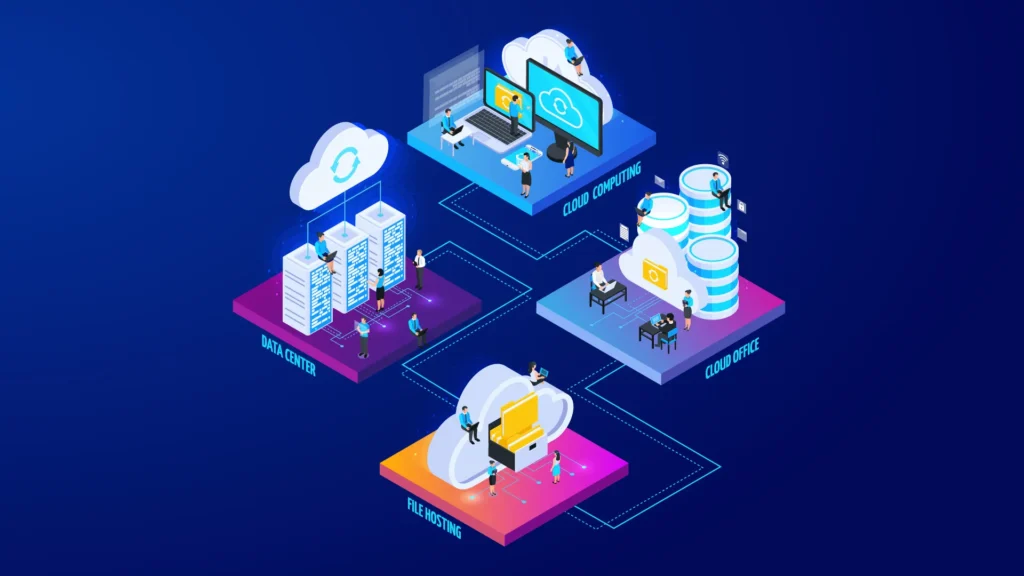
Welcome to the digital equivalent of a massive apartment complex. In the world of cloud computing, we don’t always build individual suburban mansions for every user. Instead, we build high-rise marvels where everyone shares the plumbing but has their own front door key. This is the essence of a multi tenant architecture, a cornerstone of modern software as a service.
If you are building an AI-first platform to transform cloud infrastructure, understanding the multi tenant system isn’t just a technical requirement – it’s a survival skill. Let’s dive into why multi tenancy is the “landlord’s dream” and sometimes the “neighbour’s nightmare.”
What is the Meaning of Multi-Tenant?
At its heart, multi tenant refers to a software architecture where a single software instance serves multiple customers. In this scenario, each customer is called a “tenant.” Think of it as a single instance of an app that is clever enough to know exactly who is looking at it and which data they are allowed to see.
In a multi tenant architecture, the software application is shared, but the tenant’s data remains private. This is achieved through logical data isolation, ensuring that even though you are using the same infrastructure as a competitor, your secrets stay secret.
What is Considered a Multi-Tenant?
An application is considered a multi tenant system if it serves multiple tenants from a single instance. It involves resource sharing at the hardware and software levels. Unlike a single tenant architecture, where each client gets their own dedicated software instance and hardware infrastructure, multi tenancy is all about the “sharing is caring” philosophy, mostly because sharing is cheaper.
Is Gmail Multi-Tenant?
Yes! If you’ve ever wondered how Google manages billions of accounts without buying a separate server for your cat photos, the answer is multi tenancy. Gmail is a quintessential multi tenant example.
When you log in, you are accessing the same application instance as everyone else. However, through strict access controls and identity management, Google ensures proper data isolation. You can’t see your boss’s emails (no matter how much you want to), and they can’t see yours. It’s a multi tenant masterpiece operating within a massive public cloud.
Multi-Tenant Examples in the Wild
Beyond Gmail, the tech world is crawling with multi tenant applications.
- Salesforce: The poster child for multi tenant architecture. It allows multiple organizations to use the same codebase while providing deep tenant specific configurations.
- Google Workspace: A multi tenant system where multiple users collaborate on documents while maintaining tenant isolation.
- Slack: Every “Workspace” is a tenant. Thousands of companies share the same application, but data isolation and security keep the watercooler talk private.
- AWS/Azure: These cloud services are the ultimate landlords, providing computing resources to multiple tenants simultaneously through virtual machines and shared resources.
Exploring Multi Tenancy Models
Not all multi tenant applications are built the same way. Developers usually choose from three primary multi tenancy models depending on their needs for resource optimization and data isolation.
1. Single Application with Single Database
This is the most “communal” version of a multi tenant architecture. All multiple tenants share the same database and the same schema. To keep things legal, a TenantID column is added to every table to ensure data isolation.
- Pros: Amazing cost efficiency and simple data management.
- Cons: Higher risk of data leakage if a developer forgets a WHERE clause. It’s also prone to the “Noisy Neighbour” effect.
2. Single Application with Multiple Databases
In this model, the application instance is shared, but each tenant has their own database. This provides much stronger isolation and security.
- Pros: Better data isolation and easier to meet data protection regulations.
- Cons: Higher operational costs as you manage multiple databases.
3. Multiple Applications with Multiple Databases
This is essentially single tenant behaviour dressed up in multi tenant clothing. You run separate instances of the software for different tenants. While this offers the highest data security, it kills the cost savings typically associated with multi tenancy.
The Pros: Why Software Providers Love Multi Tenancy
Why would a company like Cloudeva.ai choose a multi tenant approach? Because the benefits for software providers are massive.
Cost Savings and Efficiency
The biggest draw is cost efficiency. By using shared infrastructure, companies realize significant cost savings. You don’t need multiple servers for every small client. Instead, you pool computing resources, leading to better resource usage.
Simplified Updates and Centralized Monitoring
In a multi tenant environment, there is only one instance of the software to update. When you push a bug fix, it fixes it for multiple customers at once. Furthermore, centralized monitoring allows you to watch the health of the entire multi tenant system from a single dashboard rather than chasing down multiple software instances.
Scalability
The multi tenant architecture is designed to accommodate a surge in multiple users without a proportional increase in costs. Because you already have the shared infrastructure in place, onboarding a new tenant is often as simple as adding a row to a database.
The Cons: The Challenges of Living Together
While multi tenancy is great for the bottom line, it introduces a few headaches that require strict access controls and resource allocation strategies.
The Noisy Neighbor Problem
In multi tenant environments, if one tenant decides to run a massive data export that eats up all the computing resources, other tenants might experience lag. This is why resource allocation and “throttling” are essential.
Data Security and Privacy Concerns
When tenants share the same database, the specter of data leakage always looms. Ensuring data security requires top-tier data encryption, role based access control, and proper data isolation techniques. A single vulnerability could theoretically expose the tenant’s data for everyone in the system.
Customization Limits
In a multi tenant world, you can’t let one customer rewrite the core code. While multi tenant applications allow for tenant specific configurations (like changing colors or system settings), the underlying software instance remains the same for everyone.
Multi Tenant vs Single Tenant Architecture
Choosing between multi tenant and single tenant architecture is like choosing between an apartment and a house.
| Feature | Multi Tenant Architecture | Single Tenant Architecture |
| Infrastructure | Shared infrastructure | Dedicated infrastructure |
| Cost | High cost efficiency | High operational costs |
| Maintenance | Single update for all | Updates for each individual tenants |
| Security | Logical data isolation | Physical isolation |
| Complexity | High (in code) | Low (per instance) |
While a single tenant setup offers maximum control, it’s rarely the right choice for a modern cloud services provider looking to scale.
Ensuring Data Security in Multi Tenant Applications
To keep the “neighbours” from peeking over the fence, a robust multi tenant system must implement several layers of protection:
- Data Encryption: Always encrypt tenant’s data at rest and in transit.
- Access Controls: Use role based access control (RBAC) to ensure that multiple users within a single tenant only see what they should.
- Tenant Isolation: Implement network-level isolation so that virtual machines or containers can’t talk to each other unless authorized.
- Compliance: Ensure the architecture meets data protection regulations like GDPR or HIPAA, which often dictate how multi tenant databases must be handled.
Resource Optimization and Performance
To keep a multi tenant app running smoothly, developers must focus on resource optimization. This means writing efficient code that doesn’t hog shared resources.
In many multi tenant applications, centralized monitoring is used to track resource usage per tenant. If one customer is consistently a “noisy neighbour,” they might be moved to their own private cloud or a higher-tier multi tenant pool with more dedicated computing resources.
The Future of Multi Tenancy and Cloud Services
As cloud computing evolves, we are seeing more “hybrid” multi tenancy models. Some organizations might use a multi tenant architecture for their front-end but insist on a private cloud or their own database for sensitive data storage.
For a cloud platform, the goal is to leverage multi tenancy to provide autonomous cloud operations while ensuring that data isolation and security remain uncompromised. The ability to manage multiple instances across a private cloud or public cloud seamlessly is the new gold standard.
Frequently Asked Questions
What is the primary benefit of multi tenancy?
The primary benefit is cost savings through resource sharing. By serving multiple customers from a single software instance, software providers reduce the need for massive hardware infrastructure and simplify user management.
Can one tenant see another tenant’s data?
No. In a well-designed multi tenant architecture, strict access controls and data isolation ensure that one tenant’s data is completely invisible to other tenants.
Is multi tenancy only for SaaS?
While software as a service is the most common use case, multi tenancy is also found in IaaS and PaaS where tenants share underlying computing resources like servers and storage.
Conclusion: Is Multi-Tenancy Right for You?
Designing for scale means making trade-offs. If you want to reach multiple clients quickly, keep your operational costs low, and deploy updates with the click of a button, a multi tenant architecture is your best friend.
However, if you are dealing with highly regulated industries that require their own database and physical isolation, you might need to look at a single tenant or a hybrid multi tenancy model.
Multi tenancy isn’t just a buzzword; it’s the engine of the modern internet. By mastering tenant management, resource allocation, and data isolation, you can build multi tenant applications that are both powerful and profitable.
Optimize Your Multi-Cloud Strategy with Cloudeva.ai
Navigating the complexities of multi tenancy across different cloud services shouldn’t be a manual struggle. Cloudeva.ai is an AI-first multi-cloud management platform that transforms how organizations manage their infrastructure. Built on advanced AI frameworks, we provide the intelligent automation and autonomous cloud operations you need to scale your multi tenant architecture without the operational headache.
[Explore Cloudeva.ai Today]
Keynote Summary: Multi-tenant architecture is the backbone of modern SaaS – one software instance serves many customers (tenants), with logical data isolation ensuring privacy. It reduces infrastructure costs and enables faster updates but introduces complexity around performance isolation, compliance, and noisy-neighbor risks. The trade-off between shared efficiency and dedicated control defines architectural choices for any SaaS product.
FAQs:
What is multi-tenant architecture?
A model where a single software instance serves multiple customers, each with logically isolated data.
What are the advantages?
Lower infrastructure costs, faster feature rollouts, and resource efficiency at scale.
What are the risks?
Noisy-neighbor performance degradation, compliance complexity, and data isolation failures if not engineered carefully.
How is it different from single-tenant?
Single-tenant gives each customer a dedicated instance and hardware; multi-tenant shares both.
Is multi-tenancy secure?
Yes, when implemented with proper logical isolation – each tenant’s data remains private despite shared infrastructure.