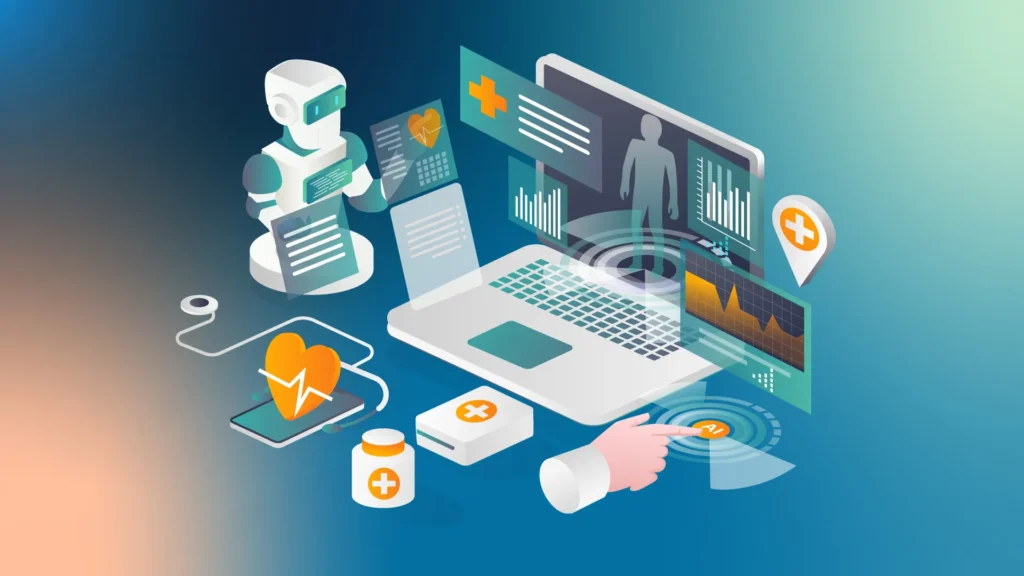
Introduction to AI in Healthcare
Artificial intelligence is reshaping the healthcare industry, ushering in a new era of efficiency, accuracy, and security. Within the healthcare industry, AI in healthcare plays a central role in applications such as medical diagnostics, patient monitoring, and decision support systems, as well as managing vast volumes of digital information generated daily by hospitals, clinics, and research institutions.
This evolution is fueled by the need for improved data security, streamlined workflows, precise diagnostic tools, and an enhanced experience for both patients and clinicians. The rapid development of AI-driven analytics, automation, and intelligent assistance has made artificial intelligence indispensable across healthcare settings.
The Transformation Driven by Electronic Health Records
The widespread adoption of electronic health records revolutionized documentation practices, enabling digital access to patient information. However, it also introduced challenges related to complexity, standardization, and security vulnerabilities.
AI systems now help improve documentation accuracy, automate entry tasks, detect unusual access patterns, and protect sensitive data using real-time monitoring techniques. These smart systems identify trends and potential risks in patient information, allowing proactive intervention and strengthening the integrity of healthcare data.
Enhanced Support for Healthcare Professionals
AI has become a valuable partner for healthcare professionals, reducing administrative burdens and enabling faster, more informed clinical decisions. Automation of administrative tasks with AI helps reduce the administrative burden and staff burnout in healthcare, allowing professionals to focus more on patient care.
Intelligent AI tools optimize workflow management, allowing professionals to spend more time delivering personalized care. Natural language processing is used in healthcare AI to automate administrative tasks, improve electronic health record management, and facilitate medical decision support by analysing unstructured data and extracting relevant information from medical records and literature.
By analysing patterns in imaging, laboratory results, and historical patient data, AI systems provide clinicians with updated insights, improving diagnostic accuracy and supporting safer, more efficient medical practices.
Broad Applications of Artificial Intelligence in Healthcare
The expansion of artificial intelligence in healthcare is evident across nearly every medical discipline. From robotic-assisted surgeries to AI-driven documentation platforms, artificial intelligence contributes significantly to operational efficiency and quality of care. AI is also deeply involved in real-time monitoring, risk prediction, and clinical support, setting the stage for increasingly automated and interconnected health systems.
Improving Health Outcomes with AI
AI-driven predictive analytics and intelligent monitoring tools significantly enhance health outcomes by enabling earlier interventions, more accurate diagnoses, and the development of tailored treatment plans. These capabilities empower healthcare professionals to identify hidden risk markers and respond quickly to emerging health issues.
Why Artificial Intelligence Is Foundational in Medicine
The healthcare sector’s growing reliance on artificial intelligence stems from its unique ability to interpret massive datasets and identify complex patterns beyond human capability. Artificial intelligence assists clinicians by delivering actionable, evidence-based recommendations, automatically summarizing research findings, and enabling fast, accurate data interpretation to support medical decision-making.
Innovations in Drug Discovery
AI is revolutionizing drug discovery, dramatically reducing the time and cost of finding new therapeutic compounds. By quickly analyzing chemical structures, genetic sequences, biological pathways, and clinical datasets, AI identifies promising drug candidates and predicts their potential effectiveness, enabling researchers to accelerate development cycles.
Expanding Applications of Healthcare AI
The rise of healthcare AI has led to improved diagnostics, personalized treatments, and optimized hospital operations. AI is now integrated with medical imaging systems, wearable devices, and advanced monitoring platforms, creating more connected, data-driven healthcare ecosystems.
Powering Progress with Clinical Data
High-quality clinical data drives the development of reliable AI tools. This data feeds advanced models that can predict disease risks, identify treatment responses, and analyse population health trends. AI’s ability to process structured and unstructured clinical data empowers researchers and clinicians to unlock deeper insights.
The Growth and Influence of Digital Health
The rise of digital health technologies has created new opportunities for remote monitoring, telemedicine, and patient-centered care. AI supports these solutions by analyzing continuous streams of patient data from wearable devices, enabling earlier detection of risks and timely interventions.
Modernizing Healthcare Systems Through AI
AI supports the optimization of healthcare systems by automating workflows, reducing administrative burdens, improving patient throughput, and supporting more accurate diagnostics. These advancements reduce costs while enhancing the quality of care.
Accelerating Disease Diagnosis with AI
AI-powered diagnostic systems enhance disease diagnosis by recognizing subtle patterns in clinical data that may escape even skilled clinicians. These systems reduce diagnostic errors, speed up evaluation processes, and support more informed treatment decisions.
Tracking Infectious Diseases with Intelligence
AI models help predict and track infectious diseases, supporting public health agencies by forecasting outbreaks and guiding targeted interventions.
Protecting Every Health Record
AI strengthens the protection of every health record, using intelligent threat detection to identify suspicious activity, prevent data breaches, and ensure patient confidentiality.
Advancements in Robotic-Assisted Surgery
AI-driven robotic platforms contribute to improved surgical precision, enhanced visualization, and minimized complications. These systems assist surgeons with steady, accurate movements and real-time decision support.
AI in Radiology and Early Detection
AI is widely used in radiology to detect early indicators of cancers and cardiovascular diseases. Deep learning models evaluate images rapidly, improving the speed and accuracy of diagnoses.
Ability to Analyze Medical Images with Precision
Advanced algorithms can analyze medical images such as CT scans, MRIs, and X-rays with exceptional accuracy, often surpassing human interpretation in specific diagnostic tasks.
Transforming Pathology Through AI
AI assists pathologists by evaluating biopsy slides, identifying cancerous cells, and enabling earlier detection of abnormalities.
AI in Cardiology
In cardiology, AI predicts heart disease risk, assesses imaging results, and helps clinicians build more personalized treatment paths.
AI in Oncology
AI tools detect tumor features, predict patient responses, and assist in early cancer diagnosis, improving long-term survival rates.
Using Electronic Health Record Systems for Prediction
AI models trained on electronic health record systems can identify risks, predict patient deterioration, and support clinical interventions earlier.
Optimizing Clinical Trials with AI
AI transforms clinical trials by analyzing participant data quickly, identifying ideal candidates, predicting outcomes, and ensuring trial efficiency.
Accelerating Drug Development
AI also supports drug development, significantly reducing research timelines and lowering development costs.
Enhancing Telemedicine with AI
Telemedicine platforms use AI to enable remote diagnostics, symptom assessment, and improved virtual consultations.
AI-Powered Chatbots for 24/7 Support
AI-powered chatbots offer continuous support, medication reminders, triage assistance, and appointment scheduling.
Risk Prediction with AI
Predictive AI identifies high-risk patients early, enabling preventive care and reducing complications.
Automating Administrative Tasks
AI-powered automation reduces the administrative burden by managing administrative tasks such as documentation, scheduling, and billing.
Streamlining Clinical Workflows
AI enhances clinical workflows by automating repetitive duties and prioritizing critical cases.
Enhancing Patient Engagement
AI-powered virtual assistants help patients stay engaged with personalized reminders, education, and real-time health insights.
Delivering Better Patient Outcomes
AI helps clinicians improve patient outcomes by providing more accurate diagnoses and supporting highly personalized treatment strategies.
Advancements in Precision Medicine
AI plays a significant role in precision medicine, enabling tailored treatments based on genetic and lifestyle factors.
Supporting Personalized Medicine
Through intelligent analytics, AI enhances personalized medicine, improving treatment accuracy.
Impact on Medical Research
AI accelerates medical research by quickly analyzing large datasets, identifying trends, and supporting evidence-based discovery.
Role of Machine Learning
Machine learning processes large quantities of data to identify correlations that guide diagnosis and treatment.
Importance of Machine Learning Algorithms
Machine learning algorithms reveal patterns in data that inform clinical decisions and disease predictions.
Sophistication of Deep Learning
Deep learning models excel at analyzing complex data such as imaging, genomics, and clinical documentation.
Advancements in Deep Learning Algorithms
Deep learning algorithms support image classification, anomaly detection, and predictive modeling.
AI and Medical Image Analysis
AI advances medical image analysis, improving diagnostic accuracy and accelerating workflows.
Applications in Breast Cancer Detection
AI supports early detection of breast cancer, improving survival rates through accurate screening.
Improving Medical Diagnosis
AI contributes to better medical diagnosis by augmenting clinical expertise.
Supporting More Accurate Diagnoses
AI assists clinicians in achieving more accurate diagnoses, reducing uncertainty in medical evaluations.
Enhancing Public Health
AI tools predict disease outbreaks, supporting public health agencies with timely responses.
Ensuring Patient Safety
AI improves patient safety by monitoring vitals, predicting complications, and reducing errors.
Securing Medical Records
AI-encryption and anomaly detection tools protect medical records against unauthorized access.
Protecting Patient Data
AI ensures the confidentiality of patient data through advanced data protection methods.
Supporting Healthcare Providers
AI assists healthcare providers in delivering efficient, high-quality care by enhancing operational and clinical decisions.
Handling Medical Data
AI improves the management of medical data, ensuring accurate, consistent processing.
Securing Healthcare Data
AI strengthens the protection of healthcare data, detecting threats in real time.
Improving Healthcare Delivery
AI enhances healthcare delivery through automation and smarter resource allocation.
Enhancing Remote Patient Monitoring
AI-powered tools enable remote patient monitoring, identifying risks earlier.
Supporting Patient Visits
AI enhances documentation of patient visits, improving workflow efficiency.
Optimizing Treatment Plans
Clinicians use AI insights to develop effective treatment plans tailored to individual needs.
Designing Personalized Treatment Plans
AI supports personalized treatment plans by analyzing historical and real-time data.
Growth of Intelligent AI Systems
Modern AI systems support faster decision-making through adaptive intelligence.
Expanding AI Technology
The growth of AI technology has transformed diagnostics, monitoring, and clinical support.
Rise of AI Powered Solutions
Healthcare organizations implement AI powered tools to support daily operations.
Adoption of AI Powered Diagnostic Tools
Clinicians rely on AI powered diagnostic tools for accurate, timely assessments.
Practical Use of AI Tools
Hospitals deploy AI tools to enhance efficiency and accuracy.
Importance of AI Models
Advanced AI models support disease prediction and risk assessment.
Growth of AI Algorithms
Sophisticated AI algorithms enhance decision-making, pattern recognition, and clinical forecasting.
Integration of AI Based Software
Clinics use AI based software for data analysis, documentation, and workflow automation.
Applications of Medical AI
Medical AI improves diagnostic accuracy and boosts physician confidence.
Collaboration of the Healthcare Team
The healthcare team collaborates effectively using AI-driven insights.
Ethics from the World Health Organization
The world health organization emphasizes ethics, transparency, and accountability in AI.
Impact on Healthcare Organizations
AI enables healthcare organizations to improve population health and reduce costs.
Upgrading Healthcare Facilities with AI
AI enhances the quality and efficiency of healthcare facilities.
Strengthening Data Protection
AI plays a vital role in data protection, safeguarding patient confidentiality.
Following Data Protection Regulations
AI ensures compliance with data protection regulations, reducing legal risks.
Enhancing Health Insurance Portability
AI supports compliance with health insurance portability standards.
Importance of Medical History
AI evaluates patient medical history to support accurate diagnosis.
Improving Health Care using AI
AI enhances health care operations and clinical delivery.
Supporting Early Detection
AI provides early detection of diseases, improving long-term outcomes.
Improving Early Disease Detection
AI supports early disease detection using predictive analytics.
Monitoring Adverse Drug Reactions
AI detects and helps prevent adverse drug reactions using real-world data.
Applications in BMC Medical Education
Reports from BMC medical education highlight AI’s role in medical training.
AI for Infectious Diseases Response
AI strengthens response efforts for infectious diseases by forecasting trends.
Securing Medical Record Data with AI
Artificial intelligence plays a pivotal role in securing medical record data by enhancing protection mechanisms, identifying vulnerabilities early, and enforcing strong data governance frameworks. As healthcare systems increasingly rely on digital infrastructures, safeguarding medical records becomes not just a technical requirement but a foundational component of patient trust and regulatory compliance.
How AI Strengthens Security for Health Record Systems
AI-driven security solutions continuously monitor access patterns and user behavior to detect anomalies that may indicate unauthorized access. These systems learn from historical data, allowing them to differentiate between legitimate healthcare professionals performing routine tasks and suspicious activity that requires intervention.
Real-Time Threat Detection and Prevention
AI systems enable real-time monitoring of health record platforms, flagging unusual login attempts, data extraction behaviors, or unexplained administrative changes. Machine learning models quickly evaluate risk levels and block high-risk activity before a breach occurs.
Protecting Electronic Health Data
The protection of electronic health data is central to maintaining confidentiality, integrity, and availability. AI-powered tools encrypt sensitive patient data, enforce access controls, and automate compliance checks with global data protection regulations, including HIPAA and GDPR.
AI and Data Protection Regulations
As health systems expand their digital footprint, adherence to data protection regulations is crucial. AI ensures that healthcare organizations maintain compliance by automatically identifying non-compliant workflows and generating alerts.
Automated Compliance Audits
AI can evaluate large datasets far more efficiently than manual reviews, ensuring that no violations go unnoticed. By examining logs, permission settings, and data-sharing practices, AI tools minimize the risk of regulatory penalties.
Ensuring Patient Data Privacy
Privacy is a key concern as more patient data is shared across interconnected healthcare platforms. AI assists in anonymizing datasets, reducing the risk of re-identification, and ensuring sensitive records remain protected throughout clinical practice, research, and healthcare delivery workflows.
AI-Enhanced Encryption Systems
Advanced encryption algorithms powered by artificial intelligence dynamically adapt to evolving cybersecurity threats, ensuring patient data remains secure even as attackers adopt more sophisticated methods.
AI’s Role in Minimizing Security Risks
AI helps mitigate risks by predicting potential breach points, allowing healthcare teams to reinforce weak areas before they are exploited.
Risk Scoring of Digital Health Systems
Using deep learning and machine learning algorithms, AI assigns risk scores to different segments of healthcare systems. This enables proactive security strategies and optimized allocation of cybersecurity resources.
Strengthening Healthcare Data Infrastructure
Healthcare facilities rely on robust digital networks for operations. AI fortifies the infrastructure by improving firewall functionality, automating patch management, and enhancing intrusion detection systems.
Monitoring Remote Patient Monitoring Platforms
With the rise of telemedicine and remote patient monitoring, AI ensures secure data transfer between patients and healthcare providers, safeguarding medical history and real-time monitoring data from interception.
AI in Protecting Medical Images and Clinical Data
Medical images and clinical data are increasingly stored digitally, making them vulnerable to cyberattacks. AI protects these resources by encrypting media files, detecting unauthorized downloads, and monitoring access logs.
Securing Medical Image Analysis Systems
AI ensures that medical image analysis software remains uncompromised, preserving the integrity and accuracy of diagnostic workflows.
Enhancing Security in Electronic Health Record Systems
Electronic health record systems serve as the backbone of modern healthcare. AI enhances their security by monitoring patient visits, logging user behavior, and verifying user credentials through biometric authentication systems.
Preventing Unauthorized Access
AI-based authentication systems, including facial recognition and behavioral biometrics, help prevent unauthorized users from accessing sensitive medical records.
Cybersecurity for Healthcare Organizations
Healthcare organizations face increasing cyber threats—from ransomware to phishing attacks. AI minimizes these risks by enabling predictive threat intelligence and automated responses.
AI-Powered Security Analytics
Using pattern recognition, AI systems identify emerging threats before they impact healthcare operations, ensuring continuous delivery of patient care.
AI for Secure Data Sharing Across Healthcare Systems
Healthcare systems require seamless data exchange to support integrated care models. AI ensures that all shared data follows strict security standards and remains protected across networks.
Secure Interoperability Frameworks
AI supports interoperability by enabling encrypted data transfers and validating security protocols between healthcare facilities.
Boosting Trust Through Data Transparency
Patient trust is essential. AI-driven dashboards provide transparency by showing who accessed patient data, when, and for what purpose.
Building Accountability in Data Governance
Through automated audit logs and validation reports, AI strengthens accountability among healthcare professionals and staff.
Future Trends in AI-Driven Healthcare Security
AI will continue to evolve, introducing new ways to secure healthcare data while supporting advancements in personalized treatment, early detection, and precision medicine.
Adaptive AI Security Models
Future AI models will autonomously adjust to new threats, providing an added layer of resiliency.
Preparing the Healthcare Sector for AI Security Integration
To fully benefit from AI, the healthcare sector must invest in infrastructure, staff training, and robust data governance frameworks.
Workforce Readiness and Training
Healthcare professionals require training to collaborate effectively with AI systems and maintain secure digital environments.
Conclusion: A Secure Future for AI in Healthcare Data Management
Artificial intelligence is revolutionizing data security in healthcare, offering advanced tools that safeguard patient records, support regulatory compliance, and strengthen digital infrastructures. By integrating AI responsibly, healthcare organizations can ensure a future where medical records remain safe, patient trust grows, and the benefits of digital health innovation can be fully realized.
Empower the Future of Healthcare with Cloudeva.ai
Healthcare is entering a new era – one where AI enhances patient care, strengthens data security, accelerates drug discovery, improves clinical workflows, and unlocks unprecedented medical insights. But with this transformation come critical challenges: data privacy risks, workflow integration issues, infrastructure demands, regulatory gaps, and the need for trustworthy, transparent AI systems.
Cloudeva.ai is built to help healthcare organizations rise to these challenges and lead confidently into the future.
Built for Today’s Challenges – and Tomorrow’s Healthcare Revolution
From accelerating clinical trials to powering telemedicine, from reducing bias to securing patient data, Cloudeva.ai gives healthcare organizations the tools to adopt AI responsibly, efficiently, and sustainably. As the global AI healthcare market moves toward $187 billion by 2030, the time to modernize is now.
Lead the Transformation
Discover how Cloudeva.ai can accelerate your AI transformation. Visit Cloudeva.ai and unlock the future of intelligent, secure, and connected healthcare.